
Is It Time to Automate Deburring? A Practical Guide for Metal Fabricators.
Deburring machines remove sharp edges, burrs, and rough surfaces from metal parts after cutting. For many fabrication shops, this work is still done manually with two or more employees, handheld grinders, and multiple shifts. It's time-consuming, inconsistent, and hard on staff.
There are many types of deburring machines with different capabilities, and the right choice depends on your production volume, part sizes, finish requirements, and materials. This guide covers the key considerations before you invest.
NOT SURE WHAT'S RIGHT FOR YOUR SHOP?
Talk to a Specialist
Every operation is different. Empire's specialists can walk you through your production volume, finish requirements, and materials — so you invest in the machine that fits your shop, not the one that looks good on paper.
Quick Self-assessment
Before evaluating machines, take an honest look at your current process. The answers will shape what type and size of machine makes sense — and whether the investment will pay back.
- How many employees are currently deburring parts, and how many hours per shift are they spending on it?
- How consistent are the results? How many parts are rejected or need to be processed again?
- Is manual deburring creating a bottleneck that's slowing downstream production?
- Are there injury concerns or repetitive motion issues? Could those employees be redeployed to higher-value work?
- What finishes do you currently need — or anticipate needing — for painting, welding, or cosmetic requirements?
- What is the range of part sizes, thicknesses, and materials you process?
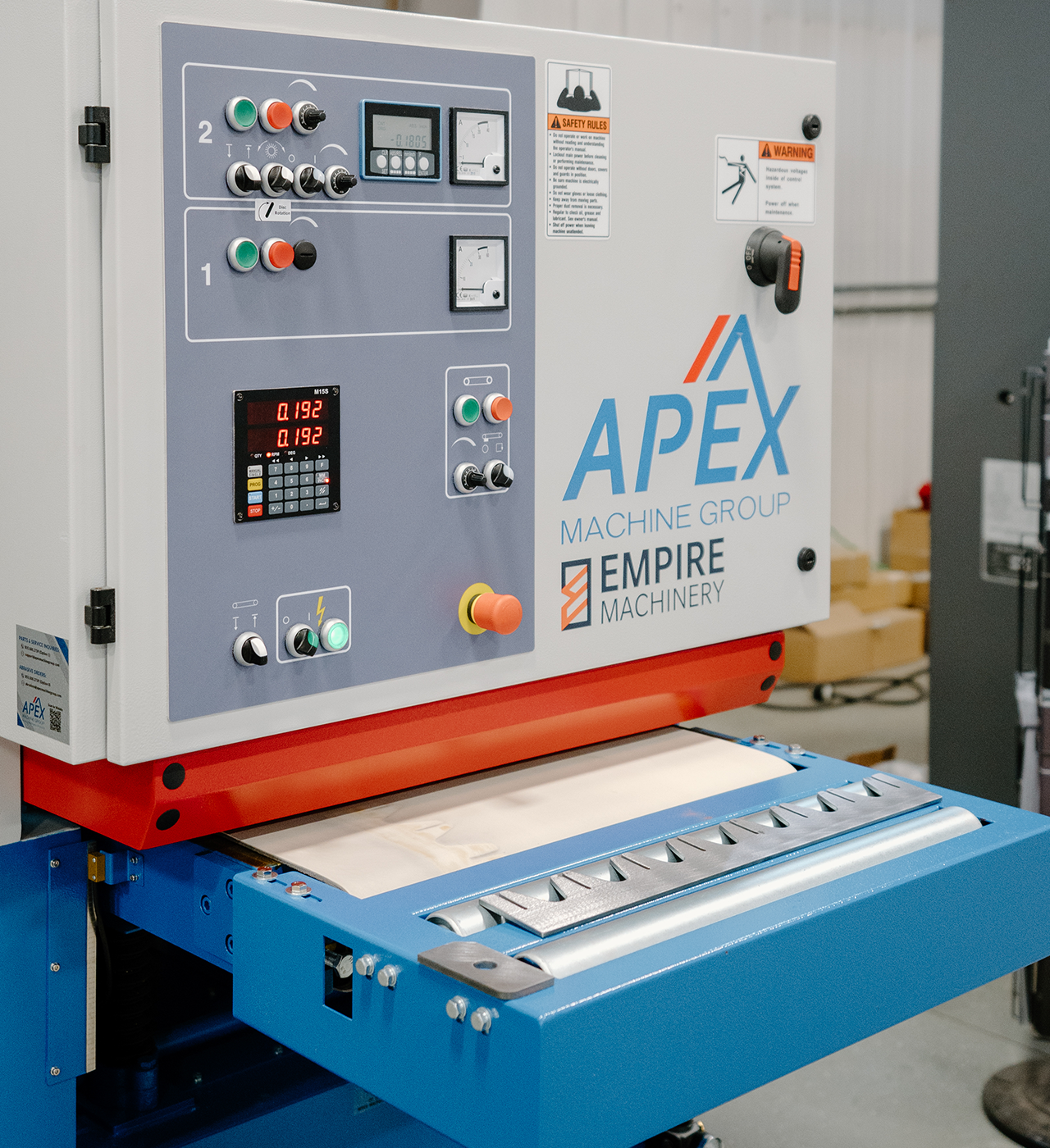
Automated vs. Manual Deburring
| Manual Deburring | Automated Deburring | |
|---|---|---|
| Labour requirement | 2+ employees with handheld grinders, across multiple shifts | Minimal operator input; skilled staff freed for higher-value work |
| Output consistency | Inconsistent results; quality varies by operator and shift | Consistent, high-quality results with minimal rejects |
| Production flow | Creates bottlenecks that slow downstream production | Processes at machine speed; removes the bottleneck |
| Staff safety | Risk of injury and exposure to harmful particles | Reduced physical risk; improved work-life quality |
| Labour cost | Ongoing cost compounds across every shift | Eliminated or significantly reduced once machine is in production |
| Staff retention | Repetitive, physically demanding work; harder to retain | Higher-value roles; improved conditions support retention |
Evaluating Finish Requirements
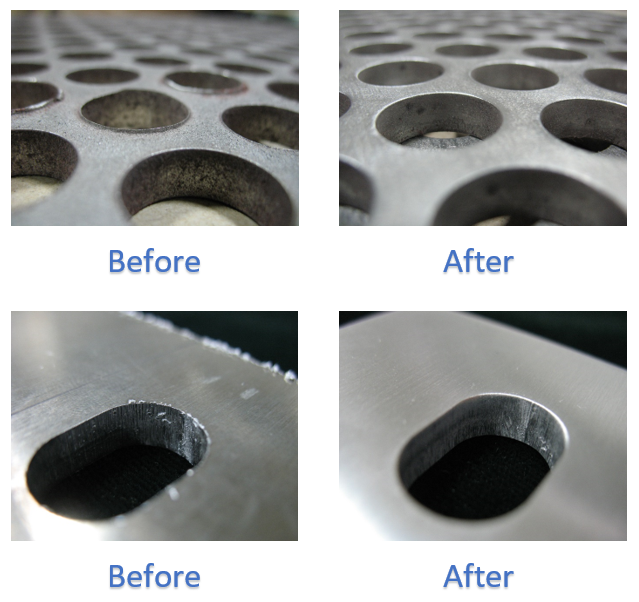
The finish you need is the single biggest factor in choosing a machine. A grinding head or contact drum cleans the top surface and delivers a specific grit finish — but leaves a sharp edge. If a sharp edge causes problems downstream, particularly for painting, you'll need an edge radius machine with multiple heads.
A disc station with rotating and oscillating discs provides effective edge radius and deburring. Two disc stations rotating in opposite directions produce arc scratches suitable for most applications and good paint adhesion. For cosmetically sensitive work requiring an edge radius and a grained finish, a multi-head machine handles both in a single pass — one station removes the vertical burr, subsequent stations complete the edge radius, and a final contact drum with a fine grit belt delivers the grained finish.
A useful benchmark: aim to run at least 80% of your parts in a single pass, with 20% or fewer requiring a second pass with different abrasives. If you're regularly stopping to switch abrasives, a machine with more working units (up to five) will recover that time. For many shops, a 1-to-3-unit machine covers their finish requirements. Deburring machines range from $15,000 to $200,000 — being honest about your volume and finish needs is what keeps you from over- or under-investing.
Frequently Asked Questions
Start with part size. Machine width needs to accommodate the widest parts you intend to process — for smaller parts, staggering them along the belt lets a wider machine process more per pass than a narrow one would. Part size and weight also determine the work area and horsepower required; large or heavy parts need a machine built for them.
If both sides of your parts need processing, a machine that handles both sides simultaneously saves significant time versus running parts through twice. For high-mix, low-volume shops with varying material thicknesses, a control console that automatically adjusts conveyor height minimizes setup time between jobs. Robotic loading and unloading is available for higher automation needs. Your daily volume and budget will determine the right configuration.
For most shops, dry is the right choice. Dry machines use abrasive tools — grinding wheels, sanding belts, abrasive brushes — without liquid coolant. They're less expensive (no stainless steel, filter beds, or water pumps), require less maintenance, last longer, and offer more configurations and more flexibility for diversified work. Aluminum can be run in a dry machine when paired with a wet dust collector.
Wet machines use liquid coolant to cool the workpiece, lubricate the cutting action, and wash away debris, which prevents re-depositing on the part. They're the right call when heat buildup or warping is a concern, or if you're replacing an existing wet machine. The trade-off is higher cost, more frequent maintenance, and the added complexity of coolant disposal and filtering.
Empire's recommendation: go dry unless your application has a specific reason to require wet processing.Yes.
A dust collector should be considered part of the investment, not an optional add-on. It removes debris generated during the machining process, protects the machine, and reduces maintenance costs and the risk of premature machine failure. In many cases, purchasing a deburring machine without a dust collector ends up costing more over time.
For shops processing a variety of materials, a wet dust collector is recommended — it acts as a spark arrestor when different materials are run. For shops processing mild steel only, a dry dust collector is sufficient. If you're investing in both pieces, factor the combined floor space into your planning from the start.
Both can be the right fit. A new machine comes with current technology, extended warranties, and the full support of the manufacturer — and can often be financed at a manageable monthly payment. For pre-owned machines, consider the age of the technology carefully: efficiency gains from newer software and controls can outweigh the price difference. Confirm that parts and software support are still available for the controls, as older technology gets phased out and replacement parts become harder to source.
Empire's experience: going with a new, high-quality unit plus a dust collector from the start is usually the better investment. Repair and maintenance costs on machines without dust collectors — or on older units pushed past their service life — tend to climb steadily and erode the initial savings.
Post-sale Service
Service is one of the most important factors in any deburring machine purchase. Every time a machine is down, shop productivity drops and downtime costs accumulate. When you pick up the phone, you need someone who answers and can provide solutions.
When talking to any vendor, ask:
- Can the vendor provide remote internet connectivity to the machine for support? How quickly can they diagnose and respond?
- How fast can replacement parts be delivered?
- Can a technician reach your shop in a reasonable timeframe, or help virtually?
- Is the software proprietary to the machine builder, or is support available elsewhere if needed?
Empire has operated a complete in-house service department since 1987, with experienced, factory-trained technicians available for Canada-wide on-site service.
Ready to Find the Right Deburring Machine for Your Shop?
There's no one-size-fits-all answer in deburring. The right machine depends on your part sizes, finish requirements, production volume, and materials — and it's worth doing the homework on what your current manual process actually costs before you decide. As we say at Empire: buy for where you're going, not where you are now
Empire has been helping Canadian and U.S. metal fabrication shops find the right equipment since 1987. We stock new and used deburring machines, accept trade-ins, and back used equipment with a 30-day guarantee. Our specialists can walk through your specific application and help you identify the right machine and dust collector pairing for the best return.
Browse Empire's deburring equipment, download the full Buyer's Guide PDF, or contact one of our Product Specialists directly.
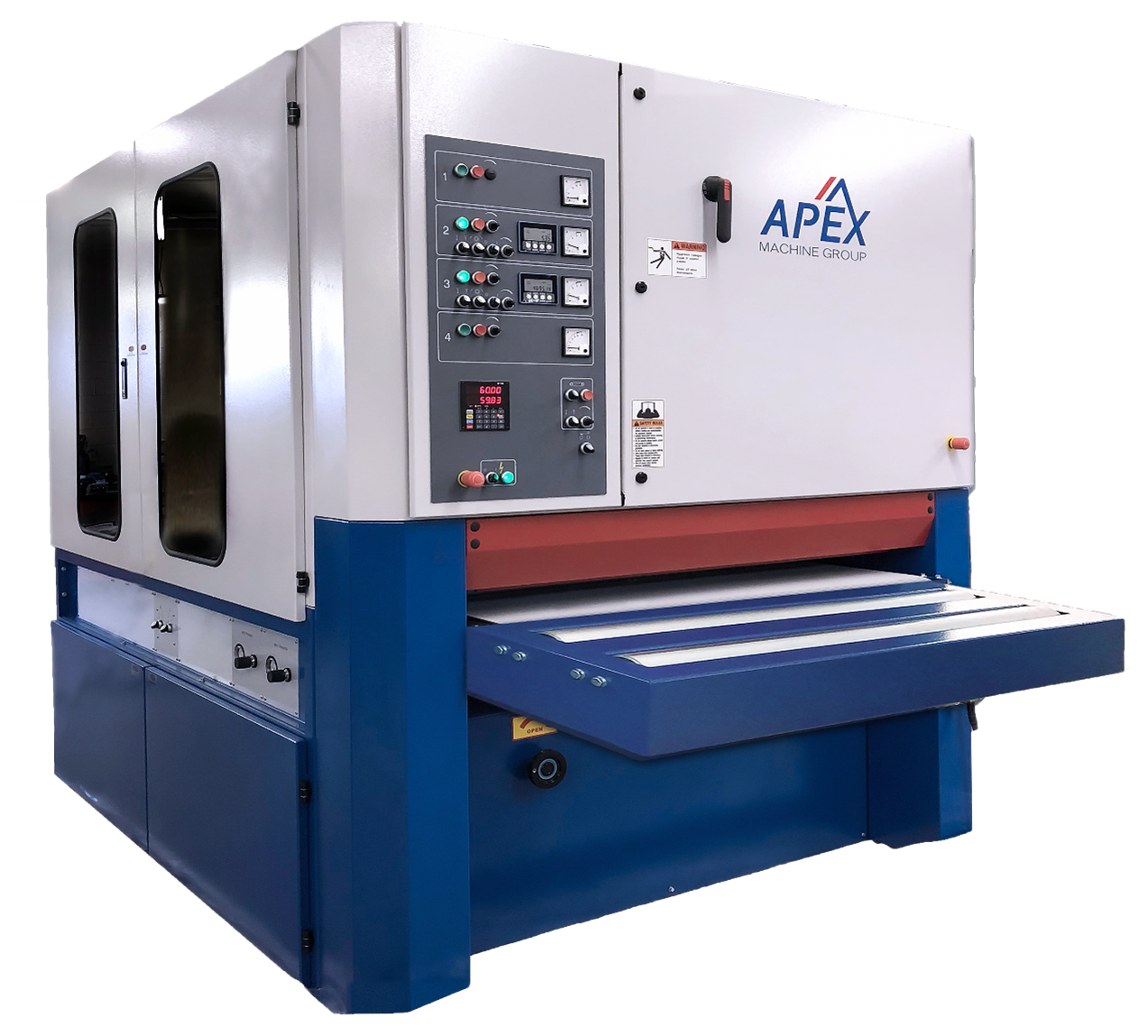
The Complete Resource
Download the Full Deburring Machine Buyer's Guide PDF
Get the complete deep-dive — machine configurations, finish requirement breakdowns, new vs. used considerations, and 30+ years of industry expertise from Empire's specialists.