
Coil Processing Equipment: What to Know Before You Buy.
A coil line is one of the most significant investments an HVAC duct fabrication shop can make. Done right, it produces a finished section of straight duct every 12 to 14 seconds, eliminates large amounts of manual labour, and unlocks prefabrication capacity that lets your shop ship 40-foot duct runs directly to job sites. Done without the right preparation, it can sit idle while you sort out floor space, complementary equipment, and material handling.
This guide walks you through the practical considerations that go into purchasing a coil line for your HVAC shop
NOT SURE WHAT'S RIGHT FOR YOUR SHOP?
Talk to a Specialist
Every operation is different. Empire's coil line specialists can walk you through your production volume, floor space, and budget — so you know exactly what you're getting into before you commit.
Is a Coil Line Right for Your Shop?
The first step in deciding whether a coil line makes sense for your operation is evaluating how much straight duct and fittings your shop is producing today. Coil lines are built to automate straight duct fabrication — not fittings. If most of your output is fittings, you should prioritize complementary equipment first (covered in the next section).
lbs of sheet metal / year threshold where a coil line typically pays back
per finished section of straight duct
prefab duct runs ready to ship
operational lifespan when well-maintained
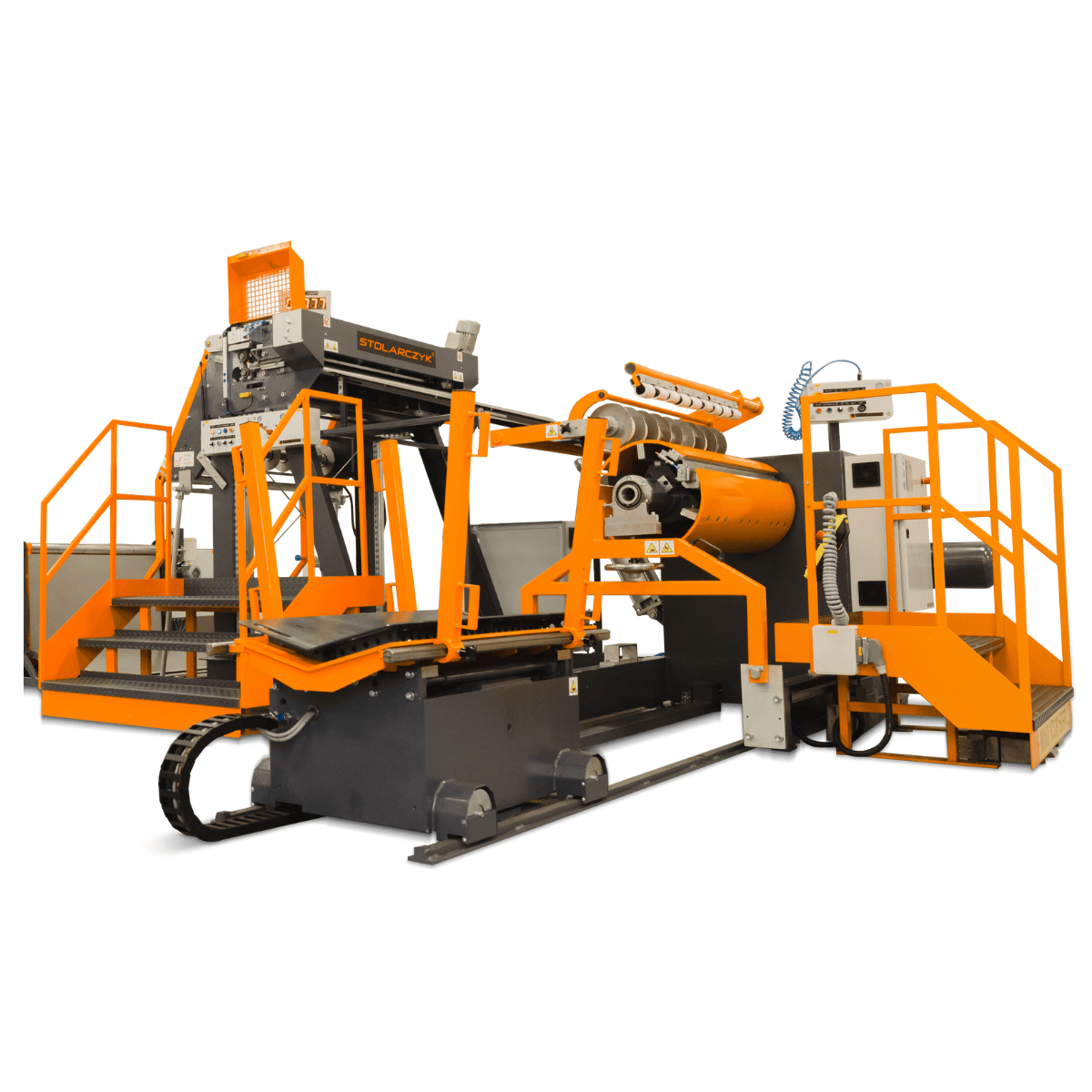

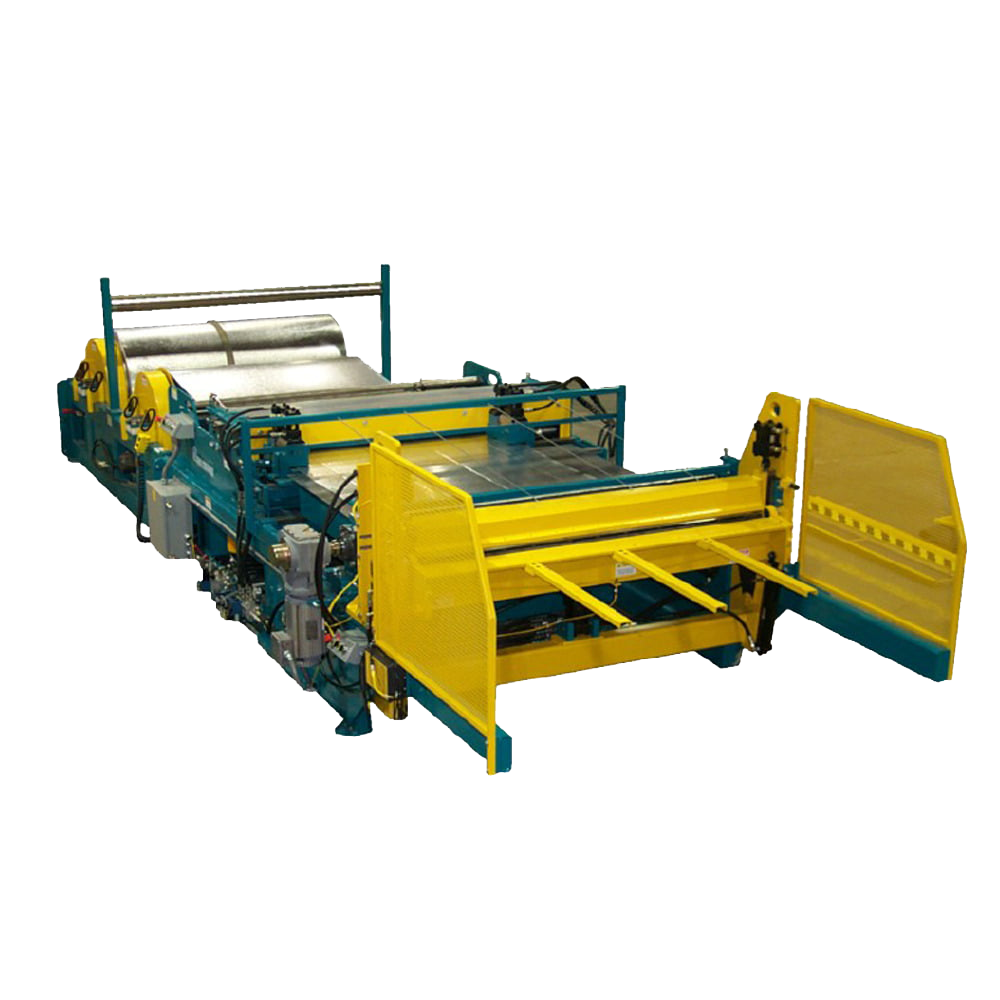

If you’re processing more than 100,000 lbs of sheet metal annually, a coil line is likely a worthwhile investment. Below that, your existing equipment plus skilled labour can probably keep up. Above that, the productivity gains and labour cost reductions of automated straight duct production start to compound quickly.
It’s also worth noting that the addition of a coil line is rarely a quick decision. Shops typically spend several months — sometimes years — planning and preparing for the install. Coil lines are physically large, change shop workflow, and require staging space for output. Careful planning is essential, especially if you’re moving toward prefabrication, which requires significant assembly and storage space.
Quick Self-assessment
- You're processing 100k+ lbs of sheet metal per year today
- Straight duct makes up a meaningful share of your output
- You have (or can plan for) ~60 ft of clear floor length
- You're growing into commercial work or scaling prefab
If you’re early in this evaluation, run the numbers using Empire’s Coil Line ROI Calculator to model the payback period for your specific volume and labour costs.
Coil Line ROI Calculator
Complementary Equipment That Maximizes Coil Line ROI
A coil line on its own is a major step forward. Pair it with the right complementary equipment and the productivity gains compound.
Corner insertion machine (Cornermatic)
Also called a corner clincher, this machine inserts corners into rectangular ductwork — fast, consistent, and far less labour-intensive than manual corner insertion. Pair one with a coil line and you can keep up with the coil line’s output without bottlenecking on corners. Empire stocks these in the TDC/TDF Corner Insertions category.
Longitudinal seam closing (Whisper-Loc)
A Whisper-Loc creates self-locking longitudinal seams in the duct, eliminating external fasteners and producing a more secure, airtight seal. Without it, you’re closing seams manually or with a less capable machine — neither keeps pace with full coil line output.
Dual Head Cornermatic Whisper-Loc Combo
Empire also offers a Dual Head Cornermatic Whisperloc Combo that handles both in a single machine, the most efficient configuration for high-volume shops.
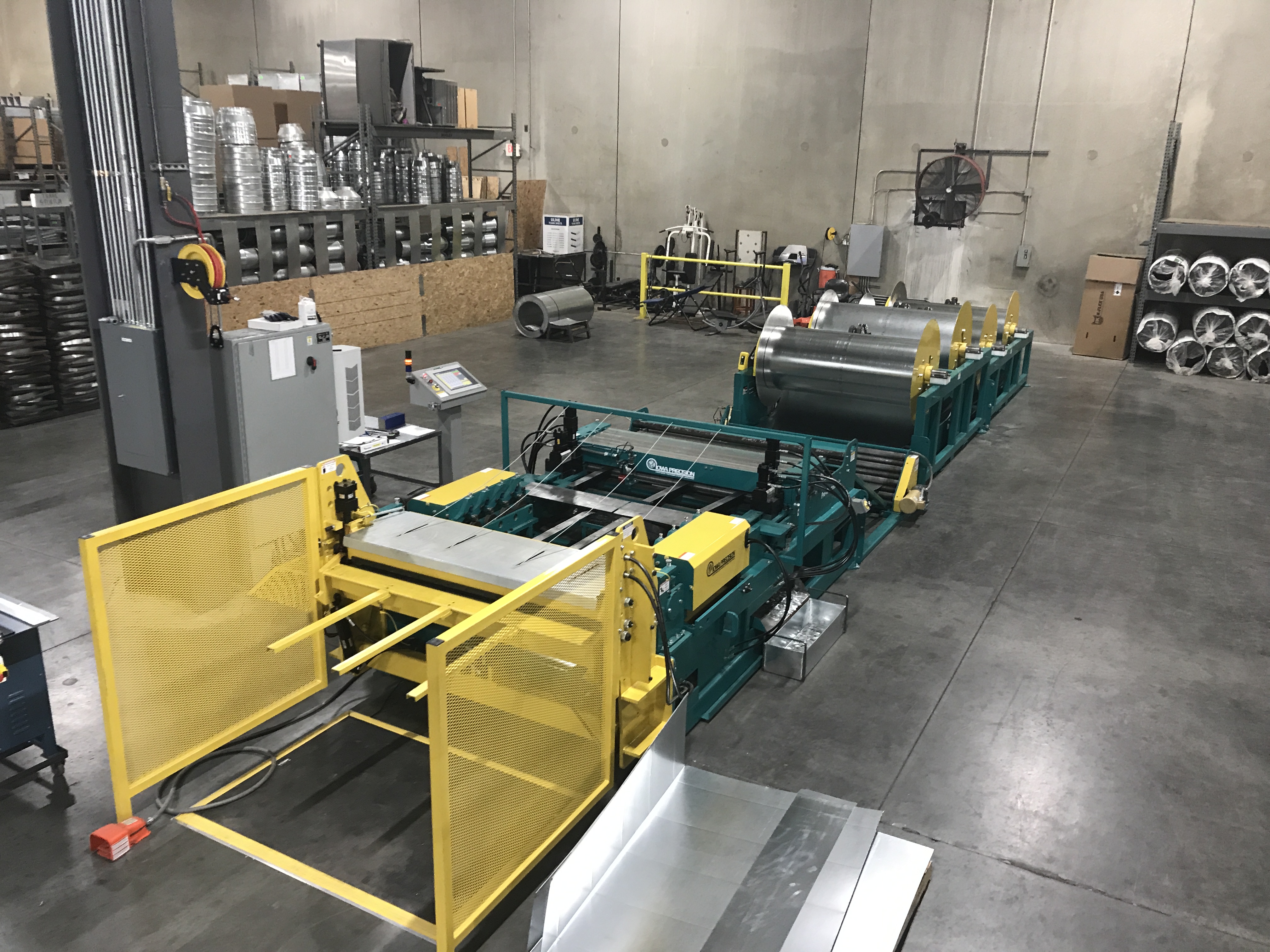
The right complementary mix depends on your work mix. Empire’s coil processing equipment specialists can help you scope the full system based on your production targets and budget.
Frequently Asked Questions
Service and Support
The most important factor in any coil line purchase often isn’t the machine itself — it’s the company’s reputation for service after the sale. A coil line that produces 12-second duct sections is also a coil line that costs you 12-second duct sections every minute it’s down.
Questions to Ask Any Coil Line Vendor
- You're processing 100k+ lbs of sheet metal per year today
- How fast can replacement parts be delivered?
- Can a service technician make the trip to your shop, or help virtually, on short notice?
- For pre-owned units: is there still parts and software support for the controls?
Empire has a complete in-house service department with experienced, factory-trained technicians available for Canada-wide on-site service. We also stock parts for the equipment we sell, so when something does come up, you’re not waiting weeks on an overseas order.
Ready to Find the Right Coil Line for Your Shop?
A coil line is the kind of investment that reshapes a shop. The shops that get the most out of theirs are the ones that planned the layout, paired up the right complementary equipment, and chose a vendor who would still be answering the phone five years in.
Need help thinking through your specific situation? Browse Empire’s coil processing equipment, run the numbers in our Coil Line ROI Calculator, or talk to one of our reps — they can answer questions and walk through your specific setup.
A coil line changes how your whole shop works, and the cost of getting the planning wrong is much higher than the cost of taking a few extra months to get it right.
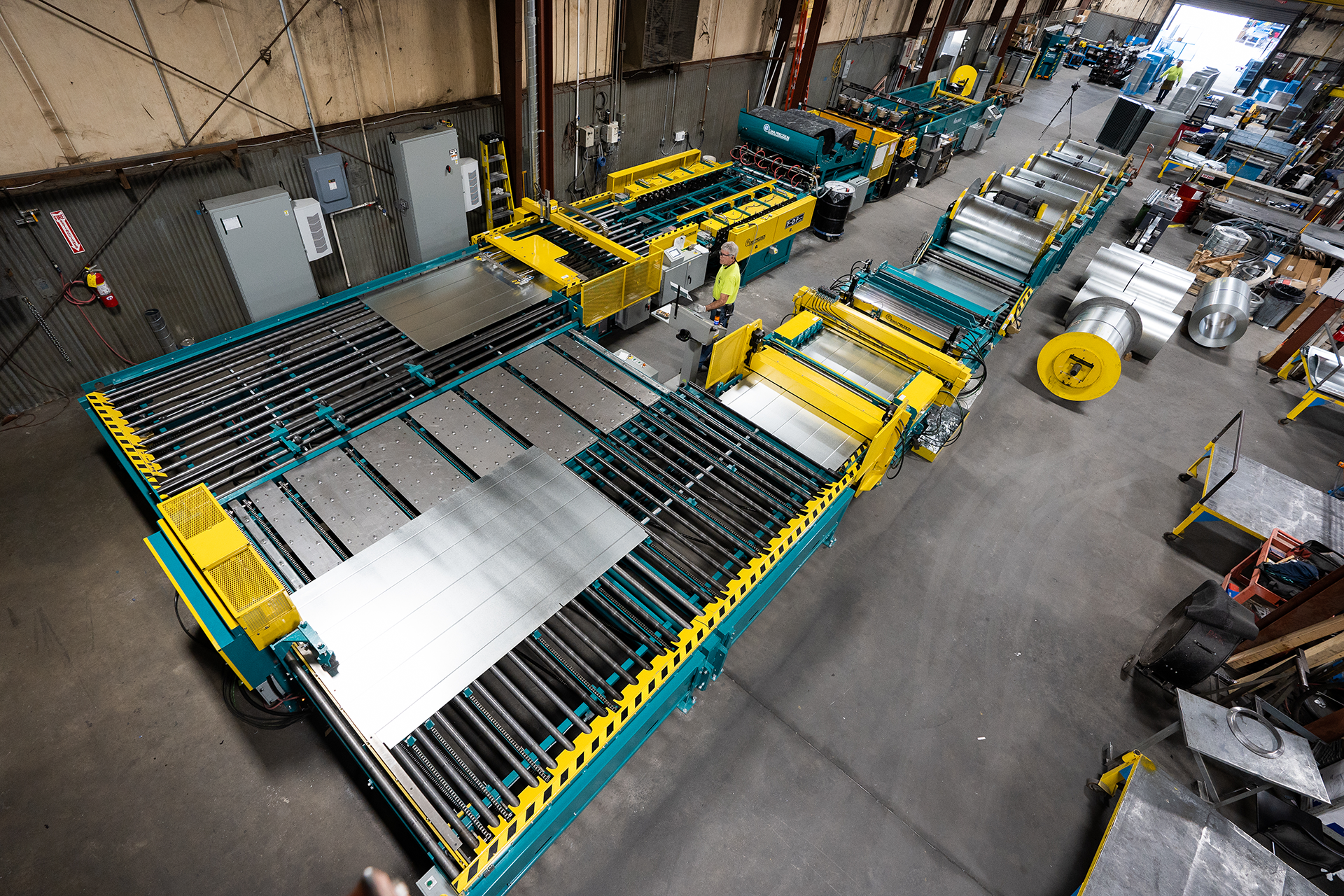
The Complete Breakdown
Download the full Coil Line Buyer's Guide PDF
Download the full Coil Line Buyer’s Guide PDF for the complete 9-page deep dive – more technical detail, equipment diagrams, and industry expertise.