
How to Spec a CNC Plasma Table: A Buyer's Guide for Fabricators and HVAC Shops
A plasma table changes how your shop handles production. Cutting that used to take hours happens in minutes. Parts that required multiple setups are now nested and run in a single program. Work you were sending out stays in-house, where you control the schedule and the margin.
But there's a lot to evaluate before committing. Plate size, material thickness, plasma source, motion control, nesting software, and post-sale support — get one of them wrong and you're either underspecced for the work or paying for capacity you'll never use. This guide covers what our customers most commonly weigh before making the decision.
NOT SURE WHAT'S RIGHT FOR YOUR SHOP?
Weigh Your Options With an Expert
Buying a machine can be complicated, and there's a lot to consider; material requirements, production volume, budget, and where your operation is headed. Empire's plasma table specialists will talk through all of it with you, so you land on the right choice.
Quick Self-assessment
A CNC plasma table is likely the right investment if:
- You're cutting mild steel, stainless steel, or aluminum at volume
- You need more precision or throughput than a handheld plasma cutter can deliver
- Post-cut secondary work such as deburring, grinding, and rework is eating into your production time
- Cutting speed or accuracy is a bottleneck on your shop floor
- Your parts require repeatable tolerances across a production run
- You want nesting software that reduces scrap and can eventually connect to your shop's workflow or ERP system
Material and Plate Considerations
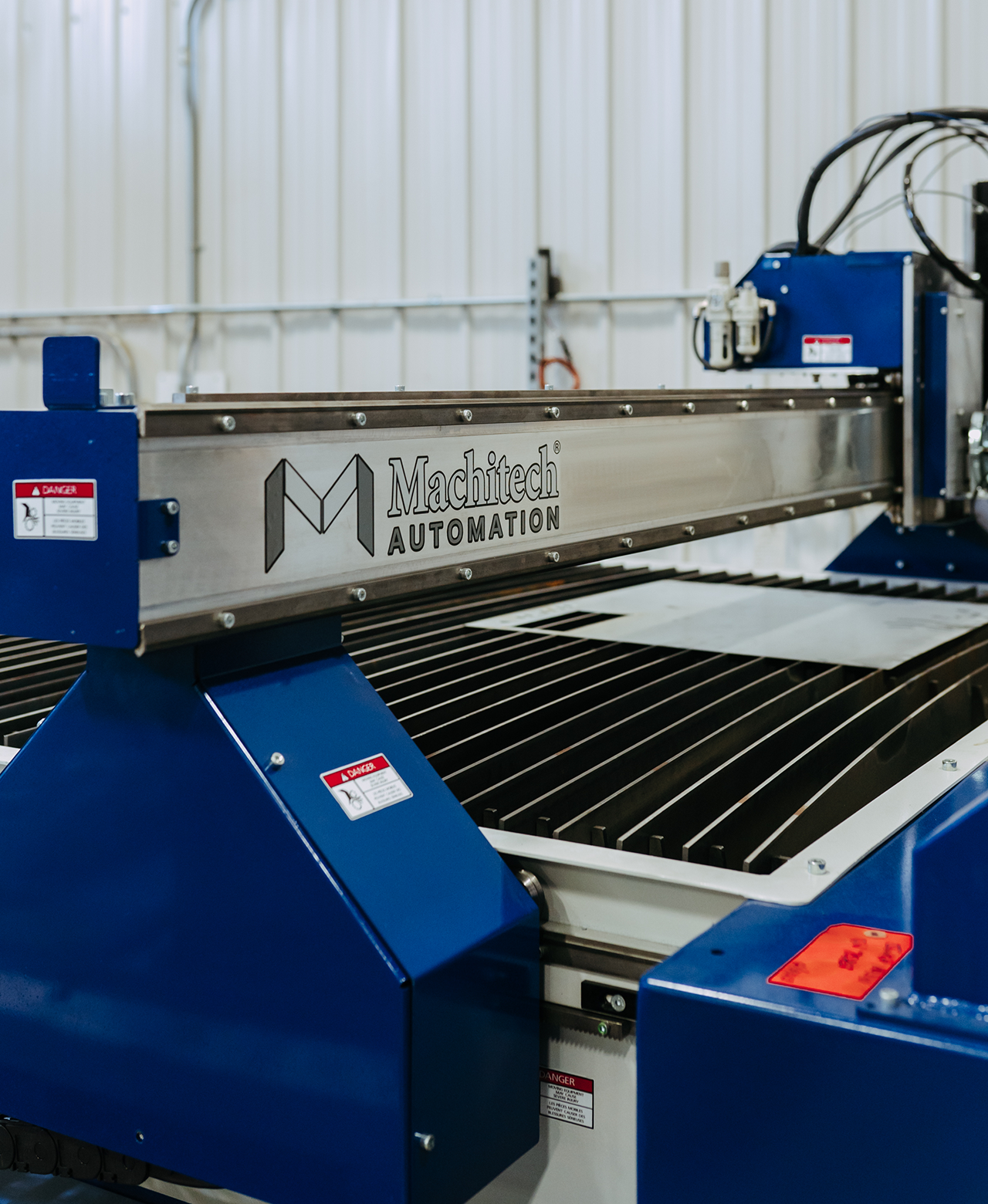
Plasma tables are highly versatile and commonly cut mild steel, stainless steel, and aluminum. The first decision you need to make is determining the type of material, sheet size, and thickness of the metal you'll be cutting; these answers determine almost everything else.
Maximum Plate Size
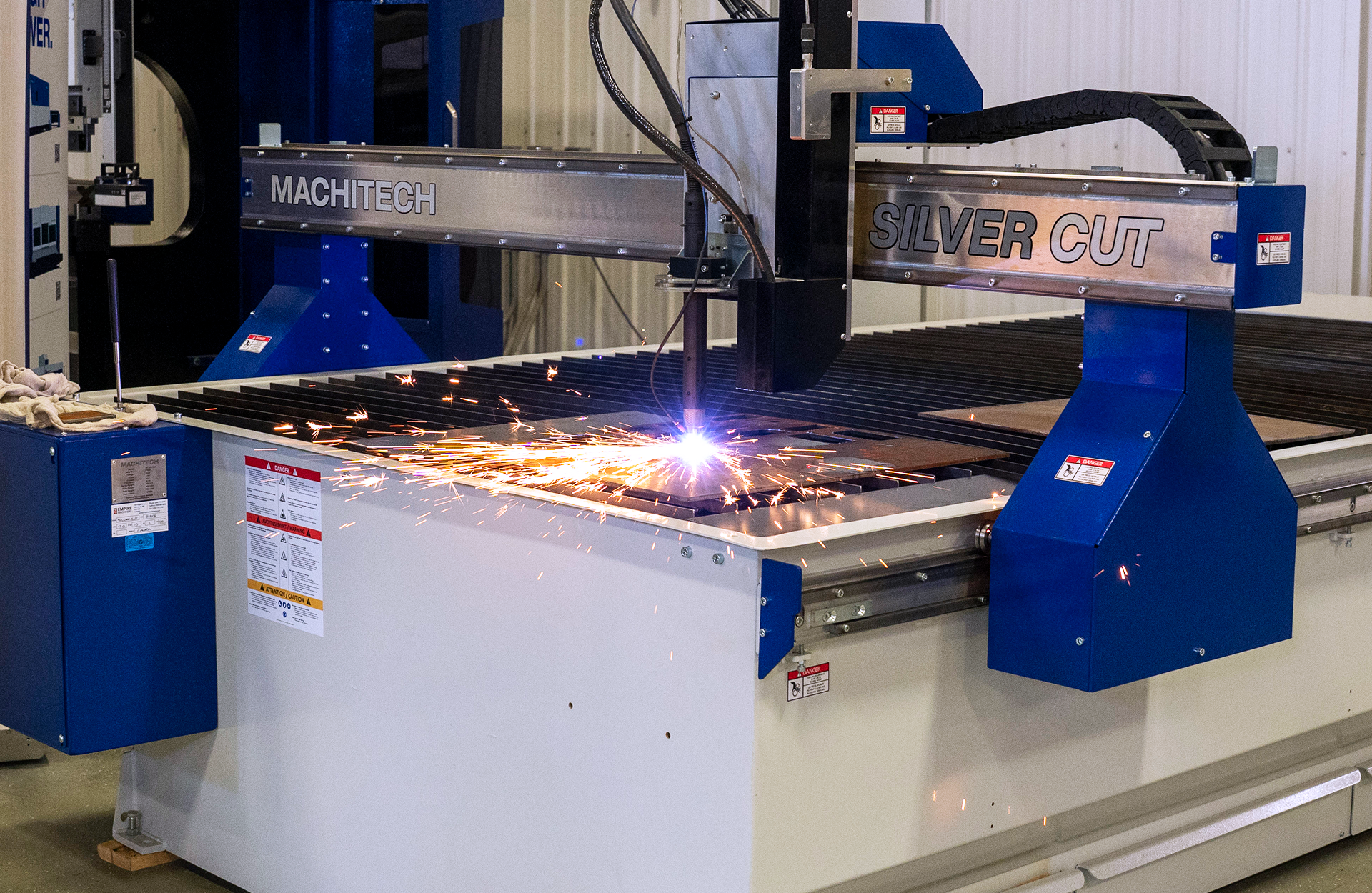
Start with the largest dimensions your plasma table will need to handle. Some models allow you to add rail to make the machine longer, giving you flexibility on length down the road. Width is a different story — it typically can't be added after the fact. Choose the size of the machine carefully, with your future capacity in mind, not just today's work.
Maximum Plate Thickness
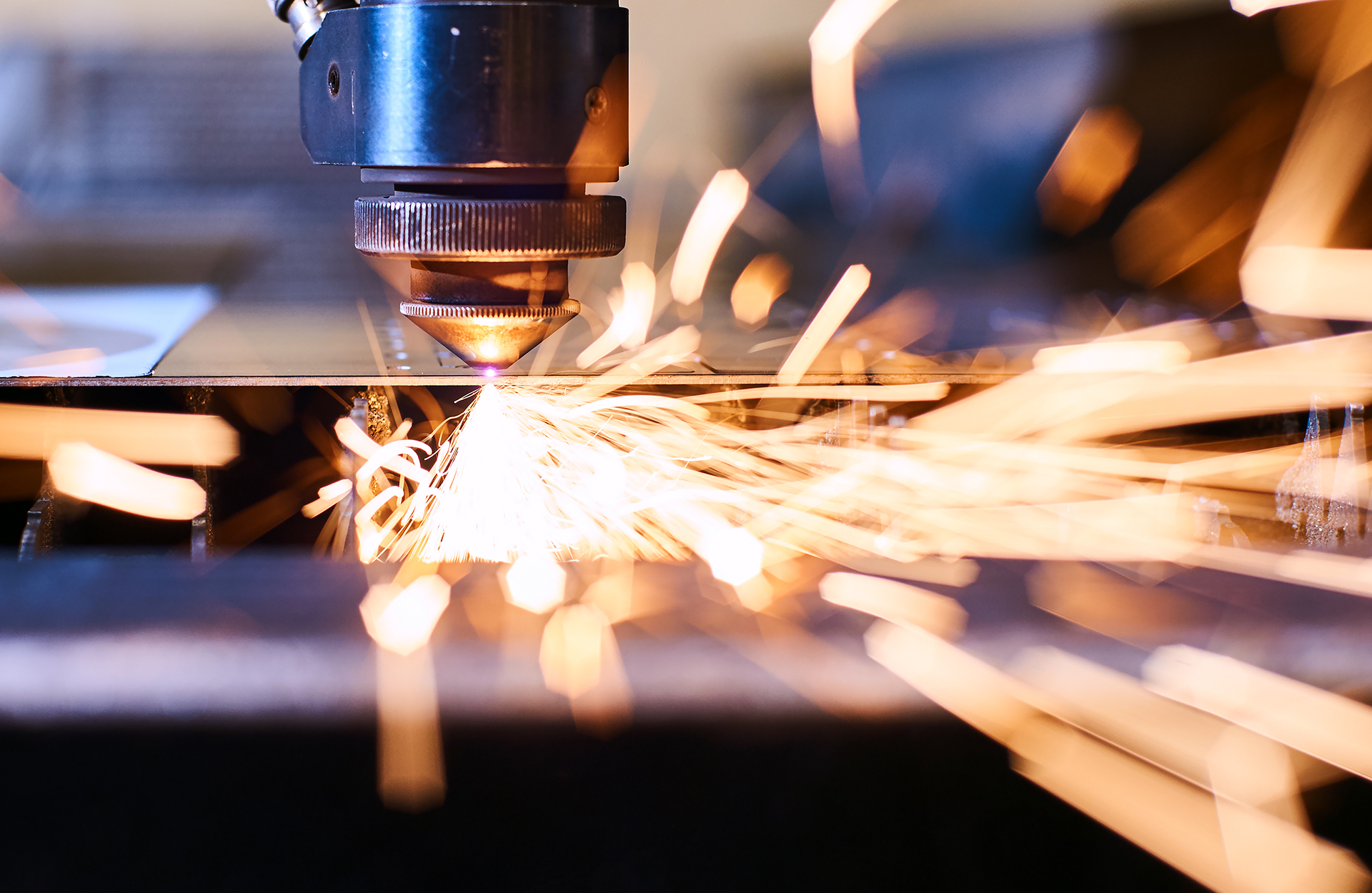
The thickness of the material you need to cut determines the plasma source you'll require. Every unit has an optimal range of thickness. Plasma cutters operating at the limit of their capacity may produce poor quality cuts — so make sure the machine your spec'ing is matched to what you'll be running through it.
Metal Fab vs. HVAC: What Changes in the Spec
The same plasma table platform serves both Metal Fab and HVAC shops, but the way you spec it out differs.
HVAC shops typically cut light gauge sheet metal. For torch height control, a roller ball head is common — it takes the waviness out of the material between the sheet and the torch, keeping that gap consistent. Conventional Air Plasma is usually sufficient for the thinner gauges most HVAC applications require.
Metal fabricators cutting thicker plate set torch height through the CNC and maintain it via Ohmic Sensing — a system that detects and adjusts for variances in material thickness as the plasma is cutting, producing a highly responsive process. Depending on the thickness and edge quality required, LongLife or High Definition Plasma will typically be the right choice over Conventional Air.
Frequently Asked Questions
Start with the edge quality your parts require and the material thickness you'll be cutting most.
Conventional Air Plasma is the most cost-effective entry point. It handles up to 1" mild steel, provides solid cut quality at moderate speeds, and has good consumable life. Right for shops where tight tolerances aren't a primary requirement.
LongLife (Oxygen) Plasma is the step up for thicker material — up to 2" steel — with faster speeds and longer consumable life than Air Plasma. The trade-off is that it may not cut lighter gauge material as cleanly.
High Definition Plasma is the choice when edge quality and precision are critical. It produces near laser quality cuts, cuts faster than both other types, and has the longest consumable life. The accuracy also unlocks higher levels of cut automation through the software.
A plasma table's motion is controlled by the type of motor in the unit. The right choice depends on your budget and performance requirements.
Servo motors are faster, quieter, and more accurate than stepper motors. They handle acceleration and deceleration through contours better, which directly improves edge quality on parts. Servo motors run cooler, produce more torque at any speed, consume less power, and run closed-loop back to the control for constant position monitoring.
Stepper motors are more cost-effective and offer a strong price-to-performance ratio. They have a lower speed range and torque compared to servo motors, and provide no feedback control from the motor. They're compatible with both the Powermax series and MaxPro series of plasma sources, making them a practical choice for shops where budget is the primary consideration and peak performance isn't critical.
There are three main rack and pinion configurations used on plasma tables:
Conventional rack-and-pinion has been the standard for years. Economical and reliable, but pinion gears and racks wear over time, gradually reducing part accuracy. Most tables mount gear racks inverted and behind covers to limit debris accumulation, but wear is inevitable.
Helical rack-and-pinion is smoother, quieter, and faster than conventional due to better gear engagement, enabling higher traverse rates and more parts per hour. Similar maintenance requirements to conventional.
Nexen rack-and-pinion replaces the gear profile with a roller pinion for near-zero backlash, greater accuracy, and traverse speeds up to 4,000 IPM. The roller design doesn't wear down, so accuracy holds long-term. It’s a larger upfront investment but offers higher accuracy and lower maintenance costs/downtime over time.
Nesting software determines the most effective way to arrange parts on the sheet to minimize scrap. The right software has a significant impact on efficiency for both the operators running the table and the staff programming it.
Look for a flexible system that can grow with your business, not one you'll outgrow in a few years. The best nesting software integrates with your shop's Enterprise Resource Planning (ERP) system and includes functionality for work order processing and material management. This type of setup provides the highest level of information flow between departments and can include reporting on usage, efficiency, and profitability.
Post-Sale Service
Post-sale service is one of the most important factors in a press brake purchase. Machine quality today is generally high, but when something does go wrong, downtime is expensive — it takes directly from your productivity and profits. The difference between a responsive vendor and a slow one can mean the difference between hitting a deadline and missing it. When talking to any vendor, ask:
- Can the vendor provide remote internet connectivity to the machine for support? How quickly can they access and diagnose an issue?
- How fast can replacement parts be sourced and delivered?
- Can a technician reach your shop in a reasonable timeframe, or support you virtually when needed?
- For pre-owned machines: are parts and software support still available for the controls?
Empire has operated a complete in-house service department since 1987, with experienced, factory-trained technicians available for Canada-wide on-site service.
Ready to Find the Right Plasma Table for Your Shop?
A plasma table is a significant capital investment. The right machine depends on the material you're cutting, the edge quality your parts require, your production volume, and where your operation is headed. Getting those variables right before you buy is what Empire's specialists are here for.
Empire has been helping Canadian and U.S. Metal Fab and HVAC shops find the right equipment since 1987. We stock new and used plasma tables, accept trade-ins, sell on consignment, and back used equipment with a 30-day guarantee. Whether you're comparing plasma sources, sorting out which size table makes sense, or just starting to research the decision, our team can walk through your specific situation.
Browse Empire's plasma cutting tables, download the full Buyer's Guide PDF or contact one of our Product Specialists directly.
The Complete Resource
Download the Full Plasma Table Buyer's Guide PDF
Download the full Plasma Table Buyer's Guide for the complete deep-dive — more technical detail, equipment diagrams, and 30+ years of industry expertise from Empire's specialists.